


AI Ethics News
Notable news in the world of AI ethics and responsible AI.
Google Pulls AI Ad at Olympics After Backlash
Google pulled one of their many Gemini AI ads at the Olympics after massive backlash. The ad showcases a little girl playing and the voiceover of her dad asking Gemini to help his daughter write a fan letter to her favorite athlete. A Google spokesperson said, “While the ad tested well before airing, given the feedback, we have decided to phase the ad our of our Olympics rotation.”
👉 Why it matters: The major backlash and criticism was not that Gemini was used, but that Gemini was used in a poor way. Gemini could have made a grocery list and helped plan dinner for the dad so that HE could have the time to help his daughter write her own fan letter, rather than letting the AI work with his daughter to create something less authentic. Google missed the mark on this, and it’s another in a series of responsible AI blunders that the company is working to come back from.
AI Boom or AI Bust?
After earnings reports in July, major AI companies saw a dip in their stock, and publications are reporting that it’s due to a loss of confidence by the public that the massive investment in AI will lead to significant innovation and gains. Economists are widely reporting on the “AI bubble” and wondering if it will pay off in the long run. In addition to that, the earnings reports showed a cat and mouse challenge in business: traditionally steady cloud computing businesses within large companies reported lower-than-expected growth, or their growth was on-track with goals, but were offset by the high cost to build AI infrastructure.
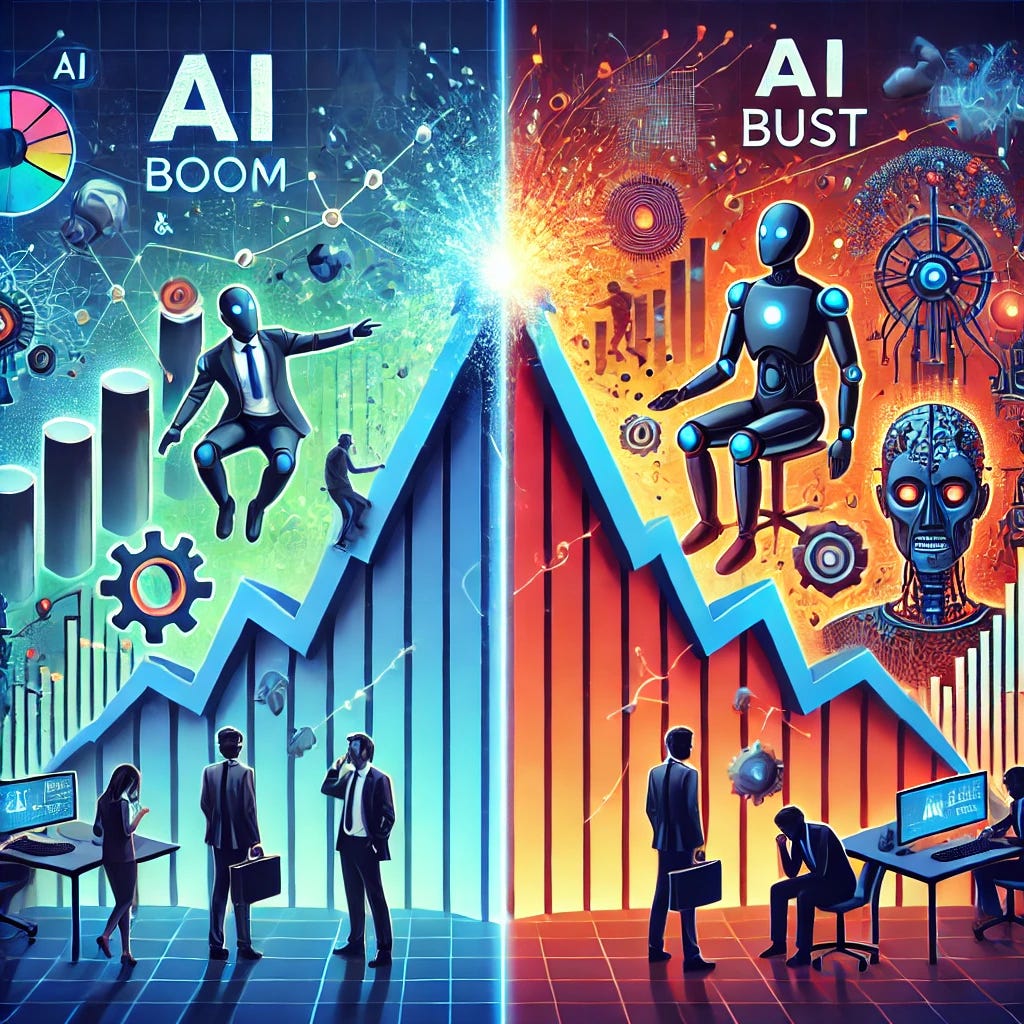
👉 Why it matters: Companies and investors have rapidly poured money into advancing artificial intelligence, creating a bubble that, if it bursts, could lead to global economic challenges similar to the 2000 dot-com crash, including bankruptcies and layoffs. Despite the widely reported potential of AI, companies have been reluctant to inform investors that gains in AI innovation, especially safely and responsibly, are a long-term effort. When the AI bubble bursts, it will likely raise questions about why companies didn’t emphasize the need for a long-term approach.
Lawyers Using AI Must Prioritize Ethics
Since the deployment of generative AI, lawyers have dabbled with the technology to assist with their job, from email creation to an attempt to use ChatGPT live in court. The ABA, who has largely been silent on the use of generative AI technology in the field, has released a formal ethics opinion indicating that, in order to comply with the ethical requirements of the role, lawyers must “fully consider” their ethical obligations to protect clients.
👉 Why it matters: Lawyers, known for their heavy reading, research, and paperwork, are using generative AI to boost efficiency and potentially reduce client bills. However, some worry this might compromise work quality for profit, leading to ethical concerns about maintaining competence. The ABA's statement highlights the need for lawyers to adhere to ethical standards to ensure clients receive the best - not necessarily the fastest - legal care.
AI in the Wild
NEW! This section will highlight new and interesting uses of AI, so you can stay up-to-date on how the technology is changing.
NVIDIA Delays Chip Release
Nvidia’s much anticipated Blackwell B200 AI chips have been delayed by at least 3 months due to a design flaw in the chip that was found late int he production process. This revelation and subsequent reporting has impacted tech stock prices around the world, and will cause business delays for major AI companies around the world. The chips are expected to ship en masse in 2025. An Nvidia spokesperson said that they “don’t comment on rumors”.

👉 Why it matters: The H100 AI chip from Nvidia has been extremely popular, and is incredibly hard to get. Creation of the B200 chips would increase supply to meet the demand, but also aid in the continued advancement of AI technology. From a business perspective, this is a major setback for Nvidia as they lead the AI chip industry and strive to stay ahead of competitors who would create their own AI chips. This also drives uncertainty in the market, increasing the nervous energy around the AI bubble and over-investment in the untested technology.
AI Policy Beat
A look at what’s happening in the world of AI policy.
The US & China’s AI Chip Dance
In 2022, the Biden Administration put into place sweeping restrictions on accessing AI chips, in an effort to keep China from getting ahead in the AI race, and in warfare AI in particular. Since then, smuggling of AI chips has increased massively in China, and the coveted technology is available for purchase at electronics markets. The New York Times reported on the workarounds that China is employing to get access to the technology, from smuggling the chips into the country, to creating new company names that bypass the “do no sell to” list of Chinese companies that the Biden administration deemed concerning the national security. Nvidia, Intel and Microsoft have “quickly formed ties” with new businesses in China, with the knowledge that the new companies are formed by former executives of the banned companies they engaged with.
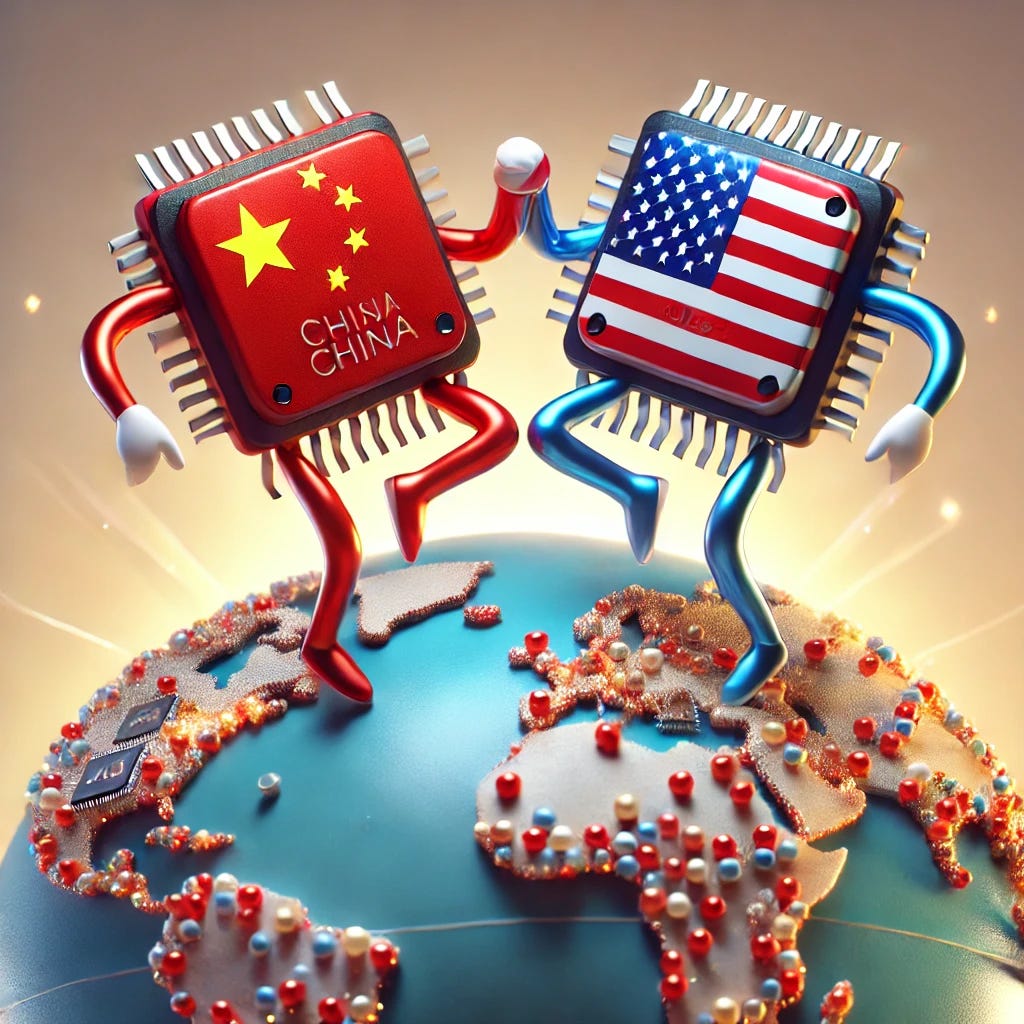
👉 Why it matters: The chips from Nvidia have helped China make AI gains in their research of AI military applications, and China’s contender status as a US military rival continues increase. Unrestricted access to the technology that could aid China in becoming a military super power would give the country a significant leg up in terms of political capital and negotiating power on the global stage.
Using AI to Thwart Adversarial Attacks
After the United States began pulling military forces out of Afghanistan, their traditional approach to gathering intelligence using humans were less effective. This gap lead to the creation of an artificial intelligence program called “Raven Sentry which used massive amounts of open source intelligence (intelligence that can be gathered from broadly available sources) to predict attacks. As of October 2020, the program could predict attacks with 70% accuracy.
👉 Why it matters: Artificial intelligence can aid military operations without replacing human decision-making. Despite its early termination, a recent program demonstrated AI's role in enhancing human decisions. A key principle of responsible AI in warfare is keeping humans involved in AI processes. This program utilized AI to compensate for reduced personnel, providing crucial intelligence for military decisions during increased adversarial attacks.
Spotlight on Research
How AI can Aid in the Creation of Bioweapons - and the Race to Prevent it
In this article, author Riley Griffen expertly lays out the the unconventional move on the part of a biochemist threw into stark relief the ability of AI to assist in the creation and dissemination of bioweapons. It is an essential read.
On Labs and Fabs: Mapping How Alliances, Acquisitions, and Antitrust are Shaping the Frontier AI Industry
As frontier AI models advance, this paper examines the integration of the AI supply chain, focusing on vertical relationships and strategic partnerships among key industry players. It profiles 25 leading companies, analyzes 300 relationships, notes significant mergers, acquisitions, and antitrust cases, and discusses market definitions and integration trends, revealing predominant horizontal growth and backward vertical integration in the semiconductor supply chain, alongside significant strategic partnerships between AI companies and cloud providers.Deepfake Media Forensics: State of the Art and Challenges Ahead
AI-generated synthetic media, or Deepfakes, created using Generative Adversarial Networks (GANs) and Diffusion Models (DMs), have influenced various fields and brought ethical and security risks. The rise of Deepfakes has led to Impostor Bias, prompting significant research into detection methods using machine learning, particularly Convolutional Neural Networks (CNNs), focusing on detection, attribution, passive and active authentication, and realistic scenario analysis.
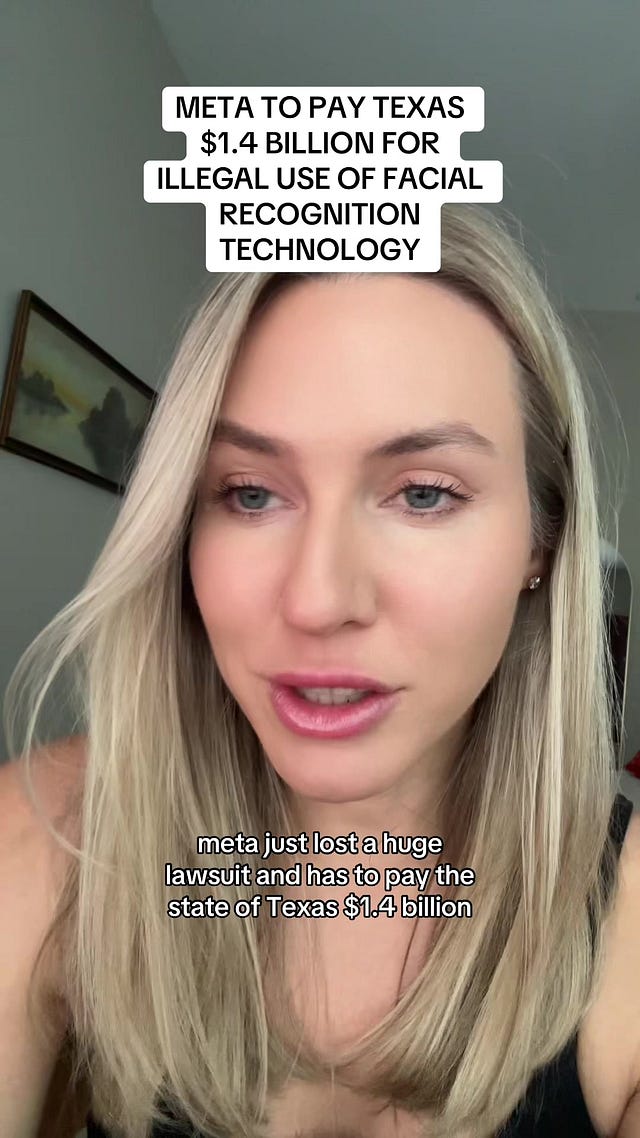
WATCH: Meta to Pay Texas $1.4B for Illegal Use of Facial Recognition Technology
Here’s some content from my other mediums. Feel free to follow me on Instagram, TikTok or YouTube.
 Tiktok failed to load.
Enable 3rd party cookies or use another browser
Let’s Connect:
Connect with me on LinkedIn.
Looking for a speaker at your next AI event? Email thepaigelord@gmail.com.
Email thepaigelord@gmail.com if you want to connect 1:1.